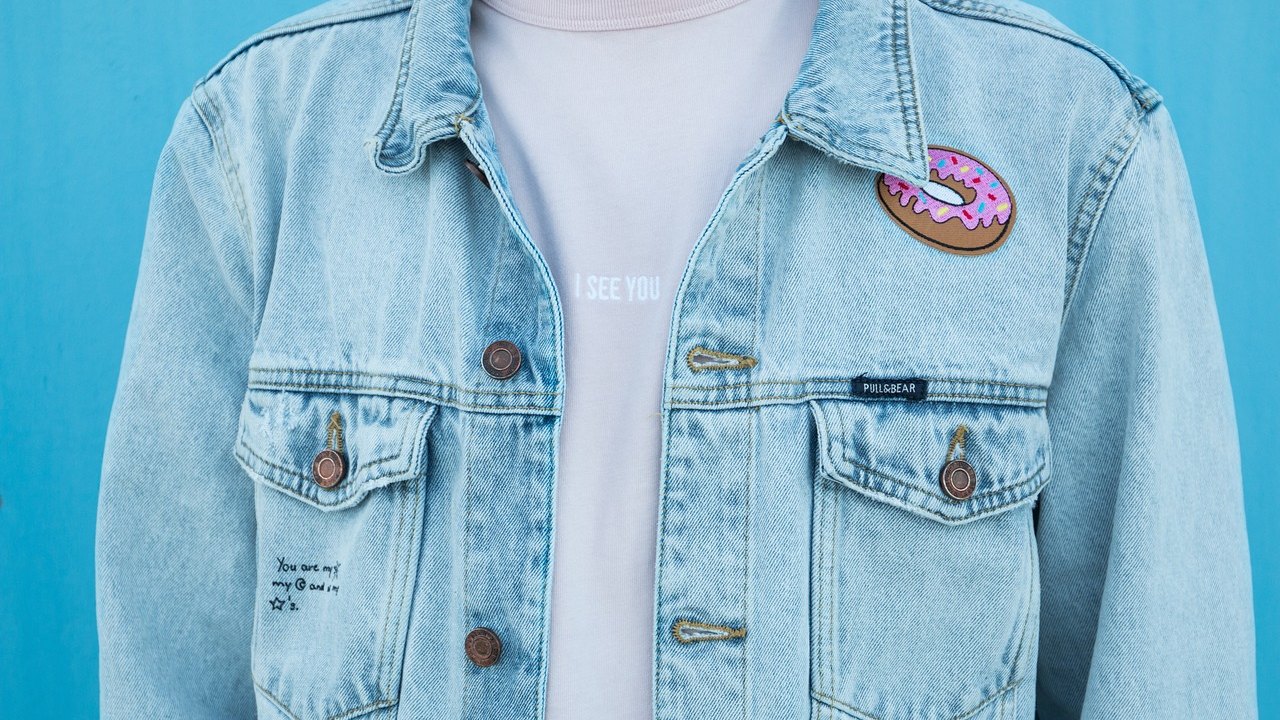
There is a stretch of about six weeks in most temperate cities where the temperature at eight in the morning and at two in the afternoon differ by more than ten degrees. In late September that means leaving the house at 9°C and eating lunch outside at 21°C.
This is the hardest dressing problem in the year — harder than deep winter, because winter at least holds still. Winter is a single constraint you can solve once. Transitional weather is a moving target, and the outfit that is right at eight o'clock is actively wrong by two.
Most people solve it by dressing for the morning and being uncomfortable all afternoon. The fix is not better clothes. It is a different starting point.
Dress for the warmest point, not the coldest
This single change inverts the instinct.
If the day peaks at 21°C, the outfit you put on in the morning should be an outfit that works at 21°C. Not an approximation of one — an actual summer-adjacent outfit: a cotton shirt, a light trouser, a skirt, a T-shirt. Then the cold ends of the day are handled by things you can remove: a knit, a jacket, a scarf, a pair of socks.
Do it the other way round and by noon you are carrying a jumper, a scarf and a coat, you are hot, and you have nowhere to put any of it. You also cannot remove your way out of the problem, because the garment that made the outfit work at 9°C is the one you are wearing.
The rule in one line: the base outfit should be correct at the maximum, and the layers should cover the minimum.
The average is the wrong number
Weather apps show one figure for the day, usually an average or a maximum, and neither is what you need.
You need the range — the two ends. Most apps have an hourly breakdown; look at the hours you will actually be outdoors, not the whole day. If you leave at eight and return at six, the hours that matter are eight to nine and five to six.
There is also a wind adjustment worth knowing. Wind removes the still air that insulates you, and a 20 km/h wind can halve the insulating value of a knit. A 12°C day with wind feels closer to 7°C, which is why a still, cold morning can feel better than a mild, windy one.
The five-piece transitional kit
These five cover the six weeks on their own, and they layer with each other in every combination.
| Piece | Why it is in the kit | What to look for |
|---|---|---|
| A fine merino knit | Warm alone, invisible under a jacket | 180–220gsm; not bulky |
| A cotton overshirt or light jacket | The removable middle | Fits over the knit without strain |
| A scarf | Adds or removes 4°C instantly | Wool, neutral, long enough to loop |
| An ankle boot | Closes the gap at the ankle | Removable sole; not waterproof-lined |
| A light trouser or midi skirt | Works at both ends of the range | Mid-weight, not summer-thin |
Each piece is useful on its own, useful in combination, and small enough to carry when it comes off. Nothing in the kit is a single-temperature garment.
What is not in the kit
A heavy wool coat. A single-temperature garment. Excellent in November, useless in September, and if you wear it in the morning you will be holding it by noon. Wait until the daily minimum is consistently below 8°C.
A down jacket. Same problem, more extreme. Down is the most efficient insulator available and the least adjustable, because it does not breathe well enough to wear when it is warm.
Thin summer fabrics. Poplin, voile, light jersey. They give you nothing when the temperature drops and they compress under a knit, so the knit loses its loft.
Shearling and heavy melton. Beautiful, and they belong to a four-week window in January. Buying them in September is how people end up with coats they wear eight times a year.
The fabric weight window
The useful range is roughly 200 to 300 grams per square metre. Below that, the fabric is a summer fabric and will not hold warmth when the sun goes. Above it, it is a winter fabric and will not fold into a bag.
This is a real number you can often find, and it is the fastest way to judge a garment you are considering. A 220gsm merino knit, a 240gsm cotton twill, a 280gsm wool trouser all sit in the window. A 120gsm jersey T-shirt and a 600gsm melton coat sit outside it in opposite directions.
If the weight is not stated, use the light test: hold the fabric to a window. If you can read text through it, it is a summer fabric. If it blocks the light completely and feels stiff, it is a winter fabric.
The ankle problem
Ask anyone what they dislike about autumn dressing and the answer is usually cold ankles, and it is almost never a trouser problem.
A cropped trouser with a low shoe leaves a gap of skin that no amount of layering above the waist compensates for. The fix is at the foot, and there are three versions:
- An ankle boot. Simplest, and it works all six weeks. Look for one that covers the ankle bone without gripping it.
- A visible sock. Not a compromise — a sock in a colour you are happy to show is a legitimate choice, and it is removable, which is the whole principle.
- A longer trouser. Works, but it commits you to the length all day, which is the opposite of what transitional dressing wants.
What does not work is a thin trainer with a bare ankle, which is why the outfit that looks best in a September lookbook is often the coldest on a September evening.
What to do with the clothes you take off
The practical difficulty is not temperature, it is storage. Four things solve it:
- Choose layers that pack small. A fine knit folds to the size of a paperback. A chunky one does not.
- Carry a bag that closes. An open tote in September is a bag that will be rained into.
- Wear the scarf rather than carrying it. It takes no space on your body and a surprising amount in a bag.
- Accept that you will carry something. The alternative — wearing everything all day — is worse. The goal is one light thing, not three heavy ones.
Temperature by configuration
| Outside range | Base | Add | Shell |
|---|---|---|---|
| 20°C+ | Shirt or tee, light trouser | Nothing | Nothing |
| 15–20°C | Shirt, mid-weight trouser | Scarf only in wind | Nothing |
| 10–15°C | Shirt, fine knit or overshirt | Both, removable | Nothing |
| 6–10°C | Fine knit as base | Overshirt + scarf | Light jacket |
| Below 6°C | Merino base | Knit + overshirt | Wool coat |
The transition from the third row to the fourth is the one people get wrong. At 10°C the instinct is to add the coat; the better answer is to add the overshirt and keep the coat for below 6°C. You will be warm enough, and you will not be carrying a coat at lunchtime.
The short version
- Build the base outfit for the warmest hour and handle the cold ends with things you can remove.
- Read the hourly forecast for the hours you will actually be outdoors, not the daily average.
- The fabric window is 200–300gsm. Below it is summer, above it is winter.
- Cold ankles are a footwear problem. An ankle boot or a visible sock solves the whole six weeks.
- Wait for the wool coat until the daily minimum drops below 8°C.